Visibility and inquiries are two different questions
Four months into local SEO, most business owners ask one question: is this working? That’s really two separate questions.
Is the business showing up where local customers search? And is that visibility turning into calls, form fills, or real interest from ready-to-hire customers?
These don’t always move together. A profile that looks incomplete can still show up sometimes, and a page that ranks well can still bring little real interest if it targets the wrong service or area.
What Google is actually showing, and where
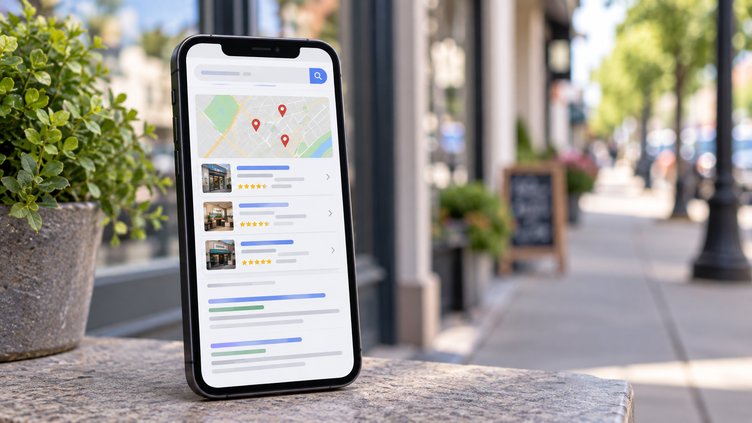
Local search results usually appear in two places. The map pack is a cluster of business listings shown next to a map near the top of the page.
Organic results are the regular website listings shown separately.
Google’s guidance on local ranking says these results show up on Google Maps and in Search. It names three factors behind local ranking: relevance, distance, and prominence.
Relevance is how well a profile matches the search. Distance is how close the business is to the searcher.
Prominence is how well known a business seems to be. This is based partly on review count and positivity.
These factors describe how Google evaluates local business results. They are not a full account of how a website ranks in general organic search.
See Google’s own guidance on improving local ranking for details. Not every local search looks the same, so check how your own business shows up for the searches that matter to it.
Check whether your Google Business Profile and contact information are accurate

Before drawing conclusions about rankings, confirm the basics on your Google Business Profile are complete. Treat this as a checklist, not a diagnosis.
Fixes across several listings aren’t always quick.
Check these:
- Categories accurately describe what the business does
- Services and description are filled out and specific
- Hours, phone number, and website link are correct
- Photos are present and current
- Reviews are present, and the business responds to them
Google’s guidance names review count and positive ratings as factors in prominence. It does not say whether recency also plays a role, so treat that as an open question.
Responding to reviews consistently is still good practice for building customer trust.
Also confirm that your name, address, and phone number match across your website and other listings. This is a common recommendation, though it isn’t proof of what’s affecting your results.
Fixing details like these is part of what Precise Wolf Digital’s SEO services cover.
What a decade of local SEO work teaches us to review

Across more than 10 years of website and SEO work on over 100 sites, Precise Wolf Digital has repeatedly seen that weak local results are rarely explained by one setting. Technical problems can matter, but search intent, page structure, trust, messaging, and the path from a visit to an inquiry often matter just as much.
That experience includes hands-on work with Google Search Console, analytics, technical SEO, site architecture, internal linking, and content strategy for small and local businesses. It has also included diagnosing sites that receive traffic without producing enough qualified inquiries.
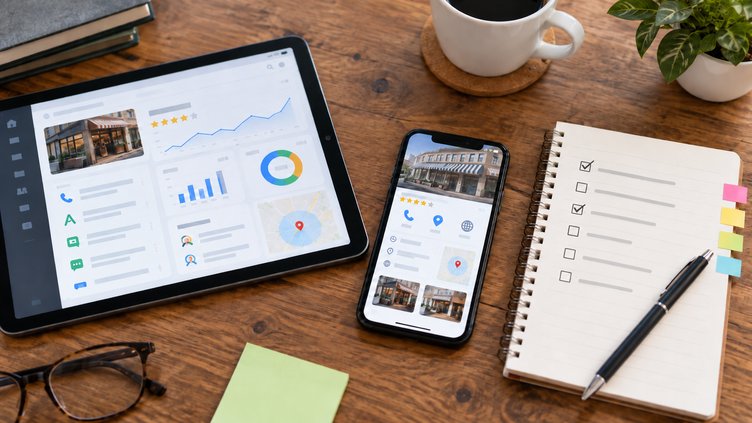
A useful review separates visibility from conversion. Search Console shows which local pages and queries receive impressions and clicks, while Business Profile performance shows interactions such as calls, direction requests, and website clicks. Those interactions are signals, not a confirmed count of leads or sales.
Precise Wolf Digital compares those search signals with the services, locations, and inquiries the business actually receives. That makes it possible to distinguish a visibility problem from a tracking, targeting, messaging, or conversion problem before deciding what to change.
Why business owners bring Precise Wolf Digital into a stalled local SEO campaign
Small and local business owners work directly with the person performing the strategy, development, content, and SEO. The work is not handed to an account manager or junior team after the initial conversation.
Precise Wolf Digital uses search data, technical audits, and actual customer intent to determine whether the next priority is a profile correction, a local page, an indexing or site problem, better inquiry tracking, or a clearer conversion path. The goal is qualified inquiries, not a vanity ranking viewed in isolation.
No audit can guarantee rankings, leads, or a fixed timeline. It can replace a vague sense that four months should have been enough with evidence about what is visible, what is attracting the right searchers, and what is preventing that visibility from becoming business.
Frequently Asked Questions About Local SEO Results After Four Months
If my business has search visibility but no inquiries, what should I check first?
Start by checking whether your profile and pages match what people actually search for. Also check whether your tracking captures interactions correctly.
A gap between visibility and inquiries can have more than one explanation, such as an untracked call button or a page whose content doesn’t match the searches bringing people to it. Look at the specific pages and data rather than assuming a single cause.
Should I prioritize map pack visibility or organic search rankings first?
Google doesn’t set a required order between the two. Map pack and organic results depend on different signals.
Rather than picking one by default, look at where you’re weaker, in the profile-driven map pack or the content-driven organic results. Focus your efforts there.
How do we evaluate relevance, distance, and prominence when results are lagging?
Relevance is whether your profile and pages match what people search for. You can check this against your categories, services, and content.
Distance reflects your actual location relative to the searcher, which the profile itself doesn’t change. Prominence relates to how well known your business appears, based partly on review volume and positivity.
How should a business handle review acquisition if recency is not a confirmed ranking factor?
Google’s guidance names review count and positive ratings as prominence factors. It doesn’t confirm whether recency plays a role, so there’s no need to chase reviews on a fixed schedule.
Asking customers for honest feedback and responding to reviews as they come in remains a reasonable practice. It helps build trust, apart from any specific ranking effect.
How do I bridge the gap between map interactions and actual revenue?
Profile interactions like calls, direction requests, and website clicks show engagement. But they aren’t a record of completed sales.
Comparing your own inquiry records and outcomes against these interaction trends over time gives useful context. It isn’t a one-to-one match between each interaction and a sale.